
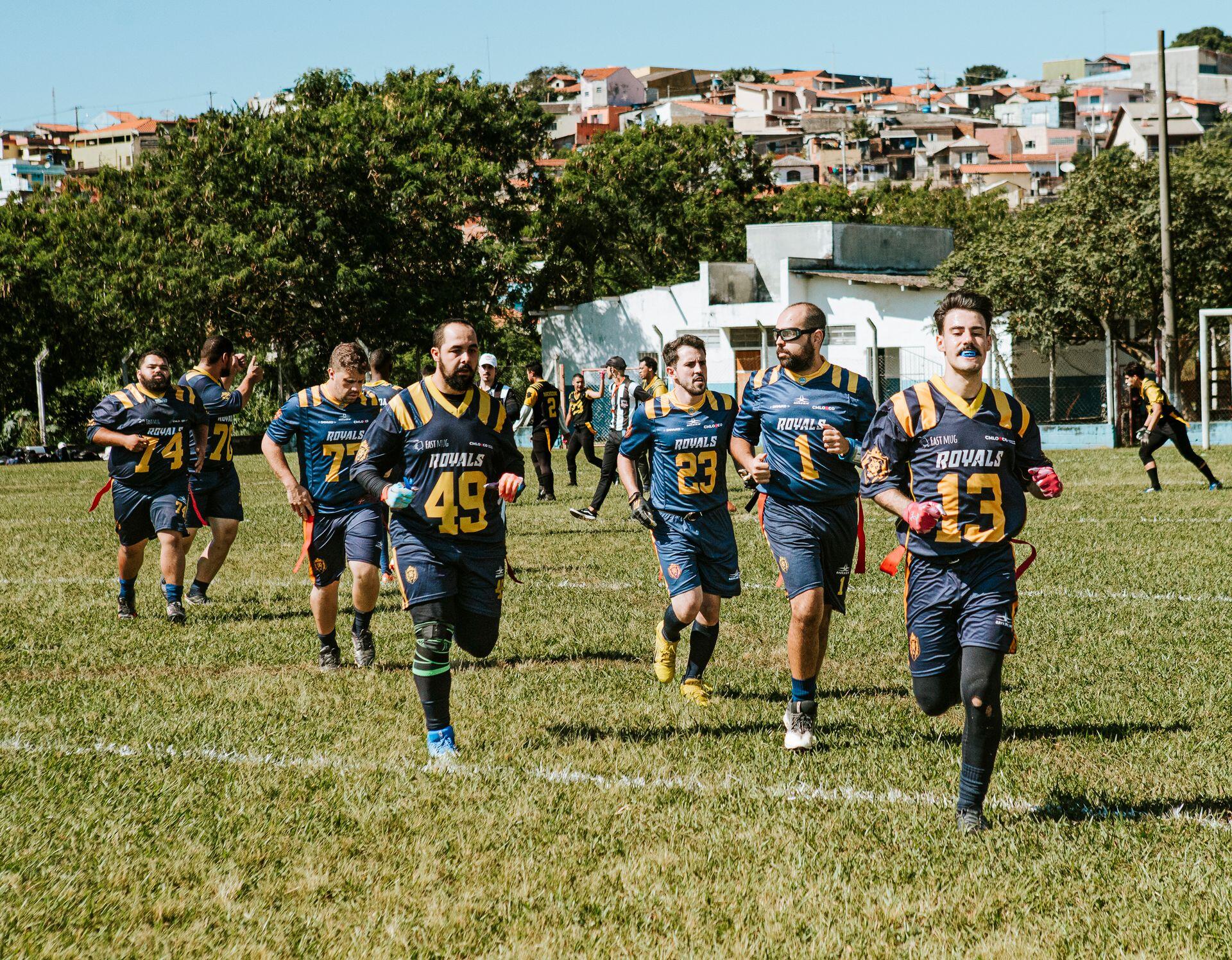

Flag football is a fast-paced version of American football that replaces tackling with flag pulling. Because there's no heavy contact, it's popular in schools, local clubs, and recreational leagues, while still offering plenty of competition. The sport is also set to make its Olympic debut at the Los Angeles 2028 Games, introducing it to a global audience. If you're new to the game, learning the basic rules is the first step towards playing with confidence. What are the rules of flag football? Let's find out!
Flag football is more creative. It’s about speed, it’s about agility, it’s inclusive.
Diana Flores, quarterback for Mexico’s national flag football team.


Basic Rules for Flag Football
Curious to read on flag football rules for beginners? Flag football follows many of the same principles as American football, but with a few important differences. Games move quickly, physical contact is limited, and success depends on teamwork, speed, and smart decision-making rather than strength.
Players: Usually 5-on-5 or 7-on-7
Goal: Carry or catch the ball in the opponent’s end zone
The big difference: Instead of tackling the ball carrier, defenders pull a flag from their belt.
Objective of the Game
The aim is simple: score more points than the other team before time runs out. The attacking team moves the ball down the field by passing or running, trying to reach the opponent's end zone for a touchdown. The defending team tries to stop each play by pulling one of the runner's flags. Once a flag is removed, the play ends immediately where the flag was pulled. Because tackling isn't allowed, players rely on quick reactions, accurate passing, and clever movement to create scoring opportunities.
Advance the ball downfield by passing or running and score a touchdown by reaching the opponent’s end zone.
The defense tries to stop the offense by pulling the ball carrier’s flag instead of tackling.
The team with the most points at the end wins.
What is your favourite flag football position?
Team Composition
The number of players depends on the competition. International tournaments and Olympic flag football use five players per team, while many local leagues play with seven or eight players on the field. Regardless of the format, every player has a specific role. The quarterback starts each play by receiving the snap and deciding whether to pass or hand off the ball. Receivers run routes and catch passes, while the centre snaps the ball to begin each play. On defence, every player is responsible for covering receivers or stopping the ball carrier by pulling a flag. Each player wears a belt with two flags attached at the hips. If a flag falls off before the snap, officials usually stop play so it can be replaced.

Game Duration
Most flag football games are split into two halves, although the length varies between leagues. Recreational competitions often play two 20-minute halves, while youth games may be slightly shorter. A short halftime gives teams a chance to rest and make tactical adjustments. The clock usually runs continuously except for injuries, team timeouts, or the closing stages of a close game. Tournament organisers may also use overtime if a winner must be decided.
2 halves: Usually 20 minutes each
Halftime: Short break between halves
Clock: Generally runs continuously, with exceptions for injuries, timeouts, or certain late-game situations
Overtime: May be used when a competition requires a winner
Starting the Game
A coin toss decides which team gets the first possession. Unlike traditional American football, there is no kickoff. Instead, the offence starts from a designated line, usually five or ten yards from its own end zone. Each play begins with the centre snapping the ball to the quarterback. From there, the offence tries to move the ball forward while the defence attempts to end the play by pulling a flag. After a team scores, possession changes, and the opposing offence starts a new drive.
Step 1: A coin toss determines first possession
Step 2: There is no traditional kickoff
Step 3: The offence begins from a designated starting line
Step 4: The centre snaps the ball to the quarterback to start the first play
The next Olympic Games will be in Los Angeles 2028!
Gameplay Mechanics
Every possession follows the same basic pattern. The offence works to gain ground and score, while the defence tries to force mistakes or stop the attack before it reaches the end zone.
I would never say never.
Tom Brady, when asked about potentially playing flag football at the 2028 Olympics.
Offence
The offence has a limited number of opportunities to move the ball. In most leagues, the team has four downs to reach midfield. Crossing midfield earns another four downs to score a touchdown. If the offence fails to reach the next marker within those attempts, possession passes to the other team. Passing is the main way to move the ball, especially in Olympic five-a-side flag football. Some leagues allow the quarterback to run immediately after the snap, while others require the ball to be handed off first. A successful offence depends on timing as much as athletic ability. Receivers need to run clean routes, quarterbacks must release the ball quickly, and every player has to know their assignment before the snap. Here is a great summary on YouTube!
Defence
Defenders don't tackle the ball carrier. Instead, they stop the play by pulling one of the player's flags. As soon as a flag comes off, the referee blows the whistle and the ball is marked at that spot. Any extra running after the flag is pulled does not count. Defenders can also knock down passes or intercept the ball. Some competitions allow an immediate pass rush, while others require defenders to start from a set distance behind the line of scrimmage.

Many leagues also use no-run zones, usually near the end zone. Inside these areas, the offence cannot run the ball and must attempt a forward pass instead. This encourages more varied attacking play and prevents teams from relying on short rushing attempts close to the goal line. Strong defensive teams communicate throughout each play, switch coverage when needed, and react quickly once the ball is thrown.
Scoring
A touchdown is worth six points in most flag football leagues. After scoring, teams usually choose between a one-point or two-point conversion from different distances. The exact placement varies between competitions, but the principle is the same: a successful conversion adds extra points to the scoreboard.
In the NFL FLAG 5-on-5 format, the offense gets four downs to cross midfield and then another four to score. A touchdown is worth 6 points, quarterbacks have 7 seconds to throw, and tackling is replaced by pulling the runner’s flag.
Some rule books also include a two-point safety. This happens when the attacking team is stopped in its own end zone because of its own actions, such as having a flag pulled while carrying the ball there. When the final whistle blows, the team with the most points wins. If the scores are level in a knockout competition, overtime rules are used to decide the result.
Let us tell you all about flag football plays in our next article!
Game Time Penalties and Infractions
Although flag football is a non-contact sport, players still need to follow strict rules. Most penalties are designed to keep the game safe and fair rather than punish physical play. One of the most common fouls is flag guarding. Ball carriers are not allowed to use their hands, arms, or the ball itself to stop a defender from pulling a flag. Doing so usually results in a loss of yards. Defenders must also avoid unnecessary contact. Pushing, holding, tackling, or deliberately blocking another player can all lead to penalties. Since flag football is built around speed and positioning, physical contact should be kept to a minimum.
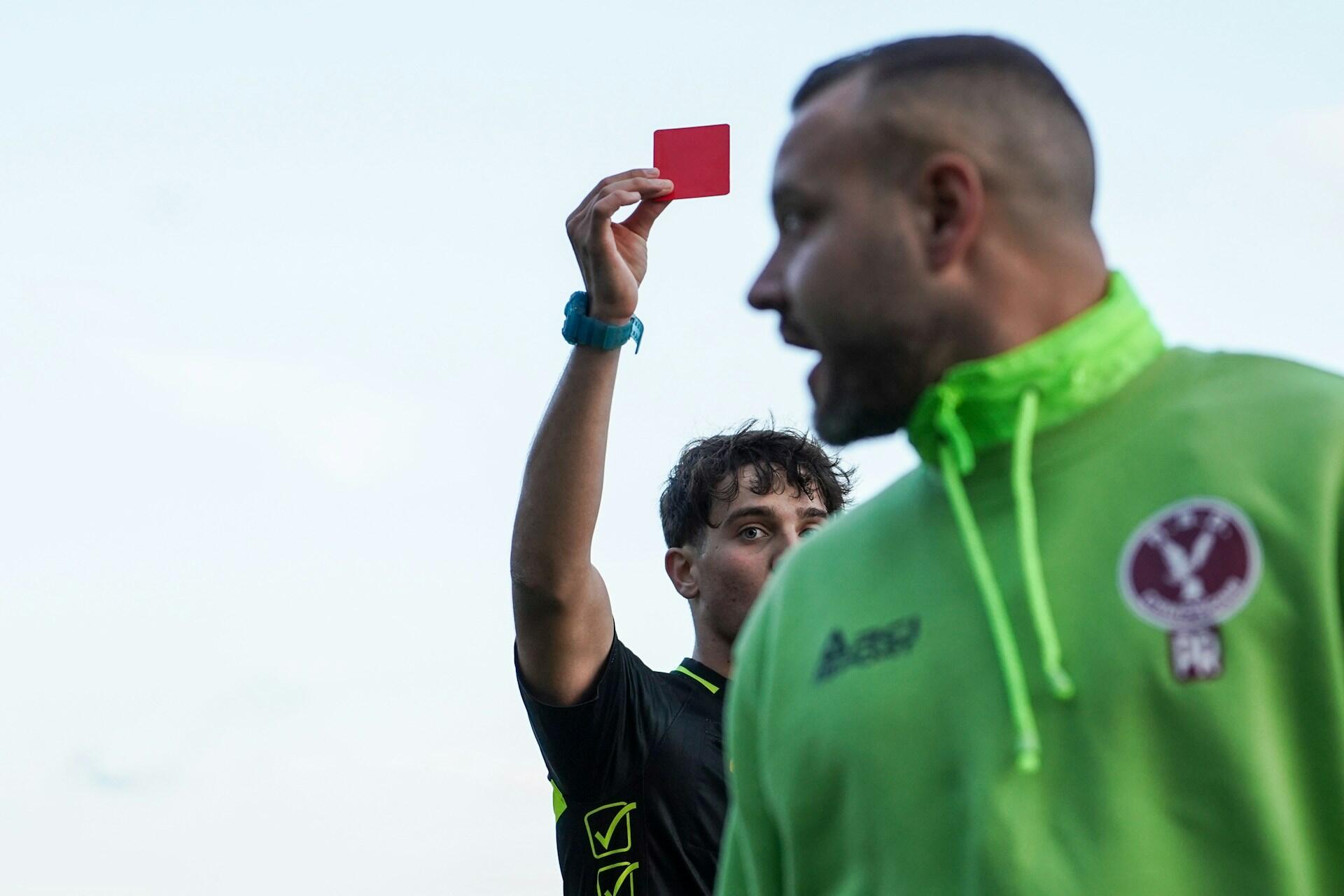
Holding onto the ball for too long, making an illegal forward pass, or snapping the ball before the referee is ready can all result in penalties. Many leagues also enforce a pass clock. If the offence fails to snap the ball before the play clock expires, it receives a delay of game penalty.
Officials may also penalise players for:
- Unsportsmanlike conduct
- Offensive or defensive holding
- Illegal rushing
- Illegal motion before the snap
- Too many players on the field
While the exact yardage differs between competitions, most penalties move the ball forwards or backwards by five or ten yards. The best way to avoid penalties is simple: know the rules and stay disciplined throughout the game. If you'd like to dig in deeper, here's a great article on the sport of flag football.
Variations in Flag Football Rules
The basic principles of flag football stay the same, but some rules change depending on the age group, league, or level of competition. For example, what are the youth flag football rules? What are the girls flag football rules?
Youth Flag Football
Youth leagues focus on helping players develop their skills while keeping the game safe. Games are often shorter, and coaches may rotate players more frequently to make sure everyone gets time on the field. Some leagues simplify the rules by removing blitzing, reducing the field size, or limiting certain defensive strategies. For younger age groups, quarterbacks are sometimes given extra time before defenders are allowed to rush, making it easier to learn passing and decision-making.
Olympic Flag Football
Olympic flag football follows the rules set by the International Federation of American Football (IFAF). Matches are played five-on-five on a smaller field than traditional American football. The faster pace places a greater emphasis on passing, speed, and tactical awareness. Blocking rules are stricter than in many recreational leagues, and there are clear restrictions on contact between players. Teams have four downs to reach midfield before earning another set of downs to score, while no-run zones encourage a more pass-focused style of play near the end zone. With the sport making its Olympic debut at the Los Angeles 2028 Games, international competition is expected to grow rapidly.
Girls' Flag Football
Girls' flag football has expanded quickly over the past few years, especially in schools and universities. In most competitions, the rules are exactly the same as those used in boys' or mixed leagues. The main differences tend to be found in league organisation rather than the rulebook itself. Many schools now offer girls-only competitions, giving more players the opportunity to compete regularly and progress to higher levels. National governing bodies have also increased investment in coaching and development programmes, helping the sport grow around the world. As participation continues to rise, girls' flag football is creating new opportunities for athletes who want to compete nationally and internationally.
Flag football is easy to learn, but takes time to master. Once you understand how downs work, when the play ends, and how teams score, you'll be able to follow the action with confidence and make better decisions on the field. The sport rewards quick thinking, accurate passing, and teamwork more than physical strength, making it an excellent choice for beginners of all ages. Whether you're joining a local club, playing at school, or watching the sport at the Olympics, knowing the rules will help you enjoy every game. If you're interested in improving your skills, working with an experienced coach can make a real difference. A tutor can help you develop your passing, catching, footwork, and game awareness, giving you the confidence to take your flag football skills to the next level! Contact a Superprof tutor today!
Summarise with AI:
Did you like this article? Leave a rating!

 Loading...